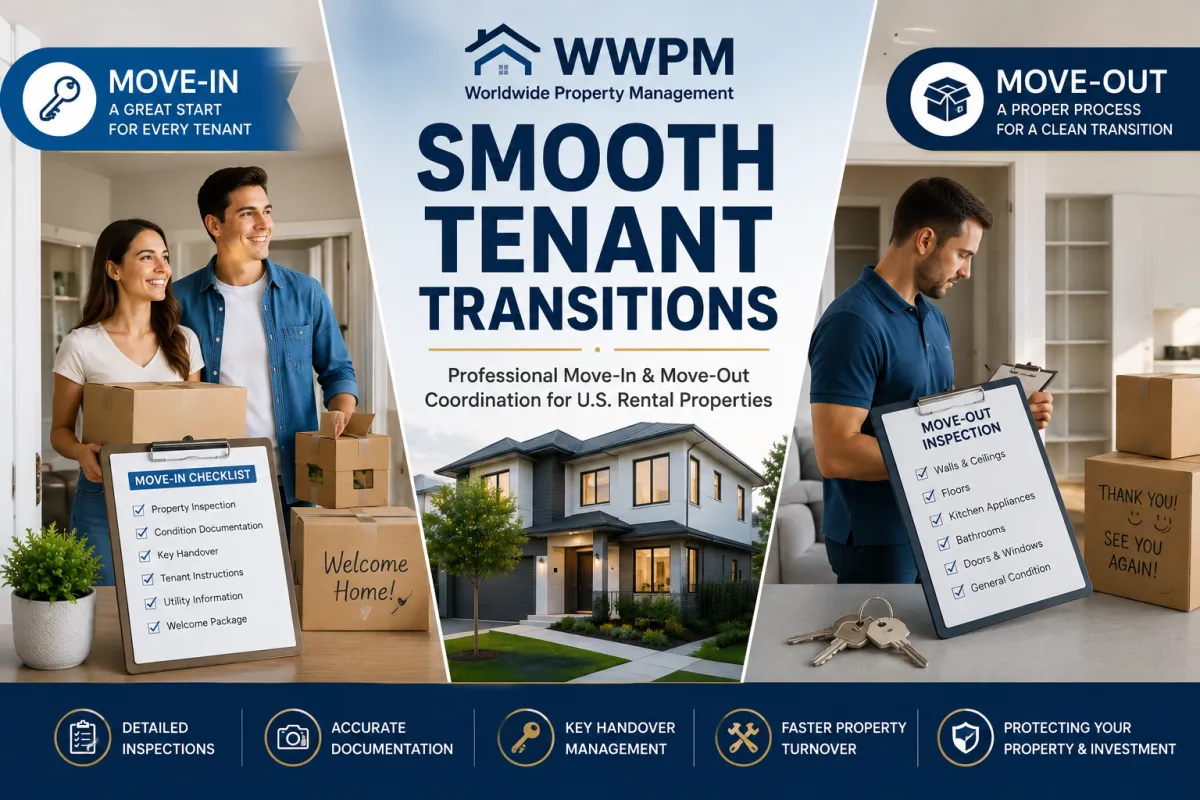
How Professional Move-In and Move-Out Coordination Protects Rental Properties in the USA
How Professional Move-In and Move-Out Coordination Protects Rental Properties in the USA
Introduction
The beginning and end of a tenancy are two of the most important transition points in rental property management.
A tenant moving into a property needs a smooth handover, clear information, and a properly documented property condition. When a tenant moves out, property owners need to understand the property's condition, collect necessary documentation, and prepare the rental for its next stage.
When these processes are handled casually, important details can easily be missed.
Professional move-in and move-out coordination creates a structured process for managing these transitions while helping property owners maintain better records and reduce unnecessary complications.
For U.S. landlords, especially those managing multiple rental properties, professional transition management can save time and provide greater peace of mind.
Why Move-In and Move-Out Management Matters
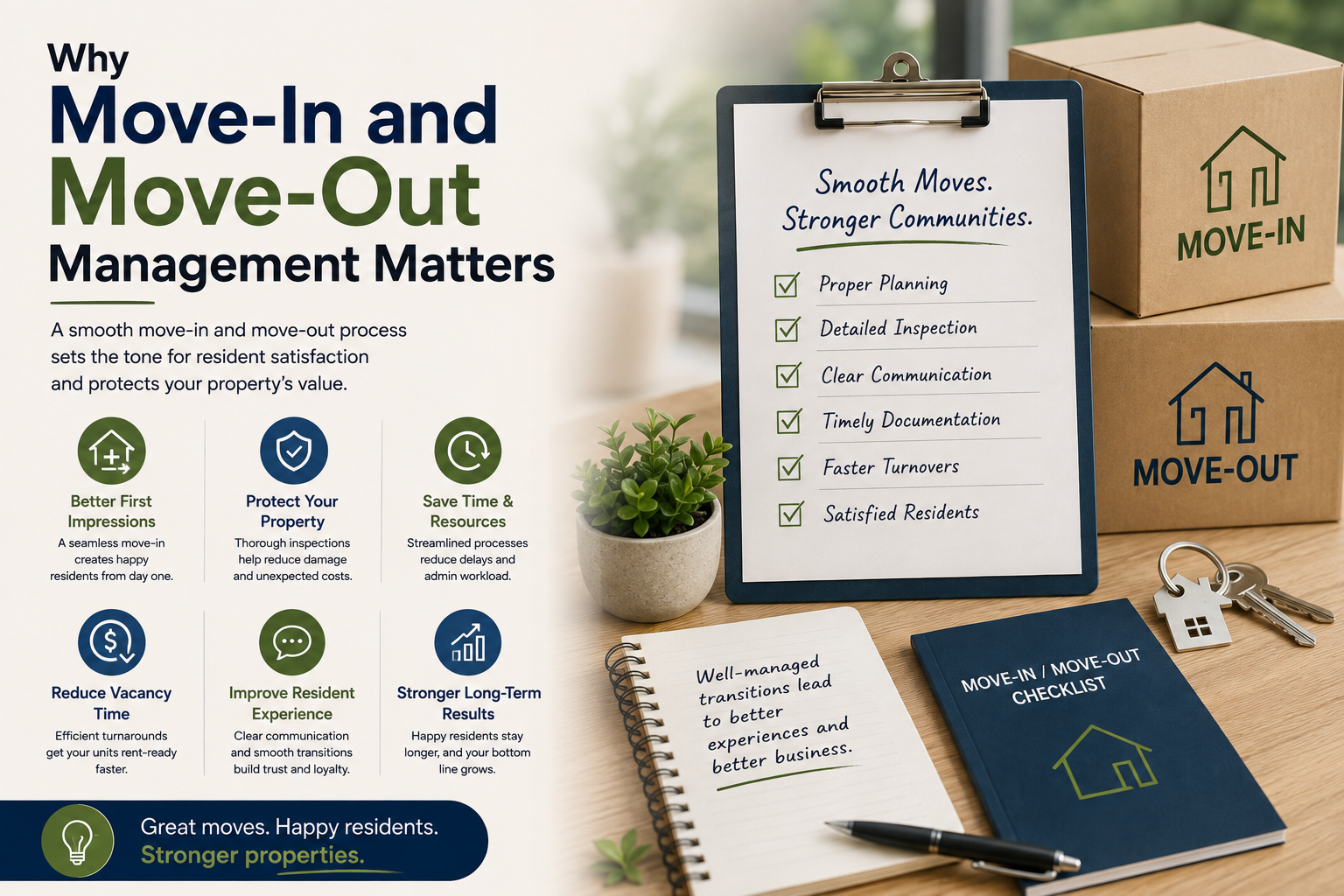
A tenant transition involves more than handing over or collecting keys.
There may be several details to coordinate, including:
Property condition documentation
Keys and access devices
Utilities and property access
Tenant instructions
Inspection records
Move-in documentation
Move-out documentation
Property preparation
Communication with the tenant
A consistent process helps ensure that important responsibilities are not overlooked.
What Is Move-In Coordination?
Move-in coordination is the process of preparing a rental property and organizing the tenant's transition into the property.
A professional move-in process can include:
Confirming the property is ready
Scheduling the move-in
Coordinating key handover
Providing property information
Completing condition documentation
Confirming required paperwork
Communicating important instructions
The objective is to create a smooth start to the tenancy.
1. Documenting Property Condition Before Move-In
One of the most important parts of a move-in process is documenting the property's condition.
A move-in inspection can record the condition of areas such as:
Walls
Flooring
Doors
Windows
Appliances
Fixtures
Bathrooms
Kitchen
Outdoor areas
Photographs and written records can provide useful documentation of the property's condition at the beginning of the tenancy.
This can make future comparisons easier.
2. Making the Tenant Handover Smoother
Moving into a new rental property can involve many questions.
A professional management team can help tenants understand important information such as:
How to access the property
Where to find keys or access devices
Property-related procedures
Maintenance request processes
Rent payment procedures
Important contact information
Clear communication at the beginning of a tenancy can create a more organized tenant experience.
What Is Move-Out Coordination?
Move-out coordination begins when a tenant prepares to leave the property.
The process may involve:
Communicating move-out requirements
Scheduling the final inspection
Collecting keys and access devices
Documenting the property's condition
Reviewing outstanding responsibilities
Coordinating necessary services
Preparing the property for future occupancy
A structured move-out process helps property owners transition from one tenancy to the next more efficiently.
3. Move-Out Inspections Provide Valuable Information
A move-out inspection allows the property manager to document the property's condition after the tenant leaves.
The property can be reviewed for:
General condition
Damage
Cleanliness
Missing items
Appliance condition
Fixtures
Doors and windows
Other relevant property features
The move-out record can then be compared with appropriate move-in documentation.
Any decisions involving charges or security deposits should be handled according to the applicable lease terms and local laws.
4. Better Documentation Helps Reduce Disputes
Clear documentation can be valuable when questions arise about the condition of a property.
Without records, it may be difficult to establish what condition the property was in at the beginning of the tenancy.
Consistent documentation can include:
Inspection reports
Photographs
Written notes
Key handover records
Relevant tenant communication
Keeping organized records gives property owners a clearer history of the property's condition.
5. Faster Property Turnover
Once a tenant moves out, the property may need to be prepared for the next resident.
Depending on the property's condition, this could involve:
Cleaning
Painting
Minor repairs
Replacing damaged items
Professional servicing
Final property preparation
Coordinating these tasks quickly can help move the property toward its next stage of occupancy.
6. Reducing the Administrative Burden for Owners
For landlords who manage their own properties, tenant transitions can require considerable coordination.
They may need to:
Contact tenants
Schedule inspections
Collect keys
Document property conditions
Coordinate service providers
Organize records
Prepare the property
A professional property management company can coordinate these responsibilities on the owner's behalf.
Move-In and Move-Out Management for Remote Property Owners
This service can be particularly valuable for owners who do not live near their rental properties.
An owner may have a property in New Jersey while living in another state—or even outside the U.S.
Being physically present for every tenant transition isn't always practical.
Professional local property management can provide on-the-ground coordination and keep owners informed throughout the process.
How Professional Coordination Benefits Tenants
Move-in and move-out management isn't only about protecting the owner's property.
It can also make the tenant experience more organized.
During Move-In
Tenants receive clearer instructions and know what to expect.
During Move-Out
Tenants can receive information about applicable procedures and deadlines in advance.
During Inspections
Clear documentation creates a more transparent record of the property's condition.
Professional communication can make the transition less stressful for everyone involved.
Common Move-In and Move-Out Mistakes
Property owners may face problems when they:
Skip move-in inspections
Fail to document property conditions
Lose track of keys or access devices
Provide unclear move-out instructions
Delay final inspections
Keep incomplete records
Start property turnover preparation too late
A standardized process helps reduce these avoidable issues.
How WWPM Supports Tenant Transitions
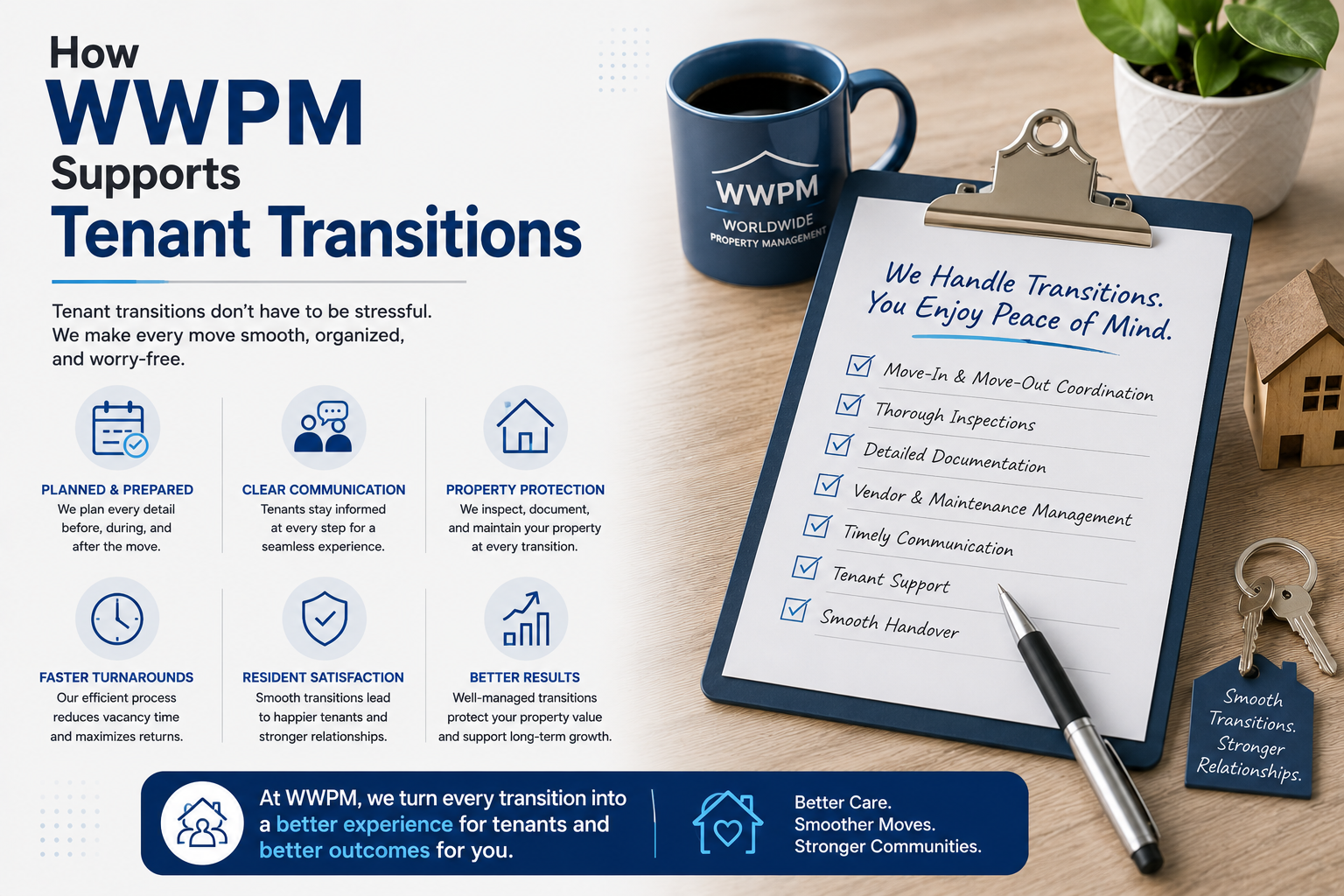
At Worldwide Property Management (WWPM), we understand that tenant transitions need to be handled carefully and professionally.
Our property management support can include:
Move-In Coordination
Move-Out Coordination
Property Inspections
Tenant Communication
Key Handover Coordination
Property Condition Documentation
Property Turnover Coordination
Tenant Placement
Lease Administration
Maintenance Coordination
Owner Reporting
Our goal is to make the transition between tenants as organized and efficient as possible while keeping property owners informed.
Final Thoughts
Move-in and move-out coordination is an important part of professional rental property management.
A structured process helps document property conditions, organize tenant transitions, maintain better records, and prepare properties for future occupancy.
For landlords managing multiple properties or rental investments from a distance, professional coordination can remove much of the work involved in these important transition periods.
With the right property management partner, owners can have greater confidence that every tenant move-in and move-out is handled systematically and professionally.