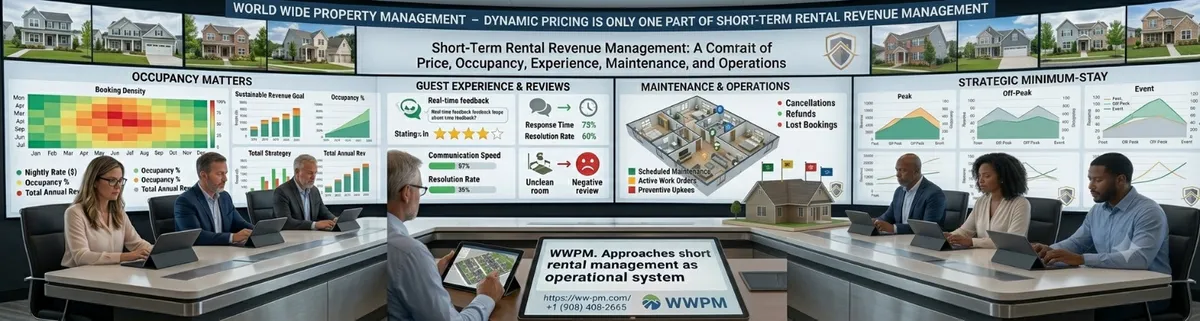
Dynamic Pricing Is Only One Part of Short-Term Rental Revenue Management
Dynamic Pricing Is Only One Part of Short-Term Rental Revenue Management
Dynamic pricing has become common in short-term rentals.
Rates change depending on demand, season, events and market conditions.
That can be useful.
But pricing alone doesn't determine whether a short-term rental performs well.
Occupancy Matters
A property earning $300 per night but sitting empty frequently may generate less annual revenue than a property priced slightly lower with stronger occupancy.
The goal isn't always the highest nightly rate.
It is sustainable revenue.
Guest Reviews Matter
Reviews influence future bookings.
A guest who experiences poor communication, maintenance problems or an unclean property may leave a negative review.
That review can affect future demand.
Maintenance Affects Revenue
A property with repeated maintenance problems may experience:
Cancellations
Refund requests
Poor reviews
Lost bookings
Maintenance therefore becomes part of revenue management.
Minimum-Stay Rules Need Strategy
Minimum-night requirements can reduce turnover costs.
But setting them too aggressively can also reduce occupancy.
The right strategy depends on the property, market and season.
Communication Is Revenue Management Too
Fast responses can improve guest confidence.
Guests are more likely to book when they believe questions will be answered.
The Bigger Picture
Short-term rental revenue depends on a combination of:
Price + Occupancy + Guest Experience + Maintenance + Reviews + Operations
Looking at only one number gives an incomplete picture.
WWPM approaches short-term rental management as an operational system rather than simply changing nightly rates.
🌐 https://ww-pm.com/
📞 +1 (908) 408-2665